On a flat or low slope commercial roof, the deck absorbs sun all day and radiates that heat straight down into the building. Meanwhile every seam, lap and fastener in a conventional roof is a place water can eventually find a way through. A sprayed polyurethane foam roofing system addresses both at once, because it insulates and, being applied as a seamless liquid, it removes the joints where leaks start.
Two different services
People often use these interchangeably and they are not the same work.
An SPF roofing system is a new roof. Closed cell foam is sprayed over the existing deck at a specified thickness, built up to create slope where needed, then protected with a coating. It insulates and waterproofs.
A restoration coating is not insulation. It is a protective, reflective membrane applied over a roof that is structurally sound but ageing. It extends life and cuts heat gain, but it adds negligible R value.
Which one your building needs depends on the condition of what is up there and what problem you are actually trying to solve. We will tell you which after inspecting, and we will say so if the honest answer is that you need a roofer rather than us.
SPF roofing systems
How it works
The existing roof is cleaned and prepared, then closed cell foam is sprayed across the whole surface. It expands, cures rigid, and bonds to the substrate. Because it is applied as a liquid it flows around and self flashes every curb, drain, vent, pipe and equipment penetration, forming a continuous surface with no seams and no fasteners. A protective top coat then goes over the cured foam to shield it from ultraviolet light and weather.
What you get
- Seamless waterproofing. Most commercial roof leaks begin at a seam, a lap or a penetration. A monolithic surface has none.
- Real insulation value. Closed cell delivers roughly R-6.5 per inch, so a roof system carries meaningful thermal performance rather than just keeping water out.
- Positive drainage. Foam can be built up in thickness to correct ponding areas, which is difficult and expensive with sheet systems.
- Self flashing details. Curbs and penetrations, which are the usual failure points, are sealed by the same continuous application.
- Lightweight. Cured foam adds very little dead load to the structure.
- No tear off in most cases. The system usually goes over the existing roof, which removes disposal cost and keeps the building watertight throughout.
Where it suits
Flat and low slope commercial roofs, warehouse and industrial buildings, retail units, and metal roofs where the profile can be filled and levelled. It pairs naturally with commercial and industrial insulation inside the envelope, since the two together deal with the whole shell rather than one plane of it.
Metal roof restoration coatings
An ageing metal roof that is structurally sound rarely needs replacing. Replacement is disruptive, expensive and sends a large volume of material to landfill. Restoration is usually the better commercial decision.
What the work involves
- Survey. We walk the roof, assess the panel and fastener condition, identify rust, check the laps and locate any active leaks.
- Clean. The surface is washed down so the coating bonds to metal rather than to dirt and chalking.
- Repair. Loose or backed out fasteners are replaced, rusted areas treated, and damaged panels addressed before anything is coated over them.
- Seal the details. Laps, seams, fasteners and penetrations are sealed and reinforced. This is where the leaks are, so this is where the work is.
- Coat. A reflective coating is applied across the whole roof at the specified thickness.
Why reflectivity matters here
A dark, weathered metal roof in Houston gets extremely hot in direct sun, and everything under it inherits that heat. A reflective coating rejects a large share of the solar energy before it is ever absorbed, which lowers the surface temperature substantially and takes load off whatever mechanical plant is working below.
The secondary benefit is thermal movement. Metal expands and contracts as it heats and cools, and that cycling is what works fasteners loose and opens laps over the years. Reducing the daily temperature swing slows that process, which is why coating a roof extends its life rather than simply covering it up.
Diagnosing your roof honestly
Before anyone quotes you a roof, it is worth establishing what the problem actually is. The two most common complaints get confused constantly.
If water appears when it rains, in specific locations, and stops after the rain, you have a leak. Locate and repair it.
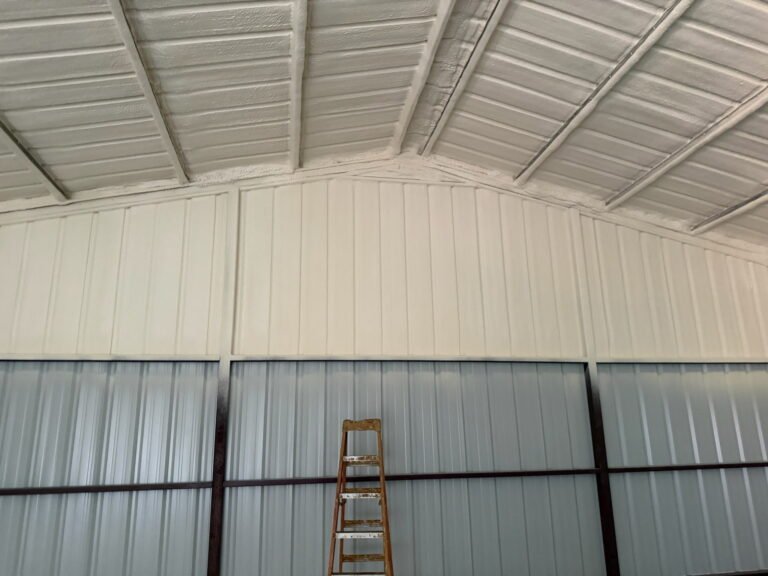
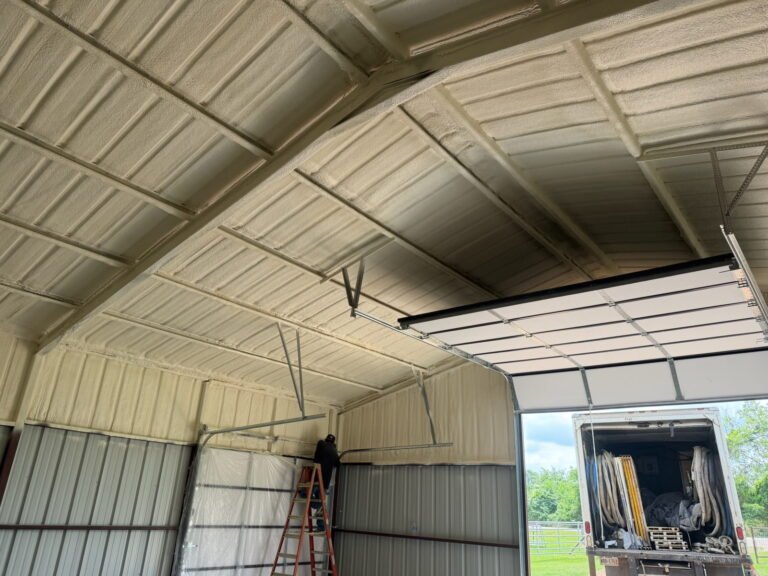
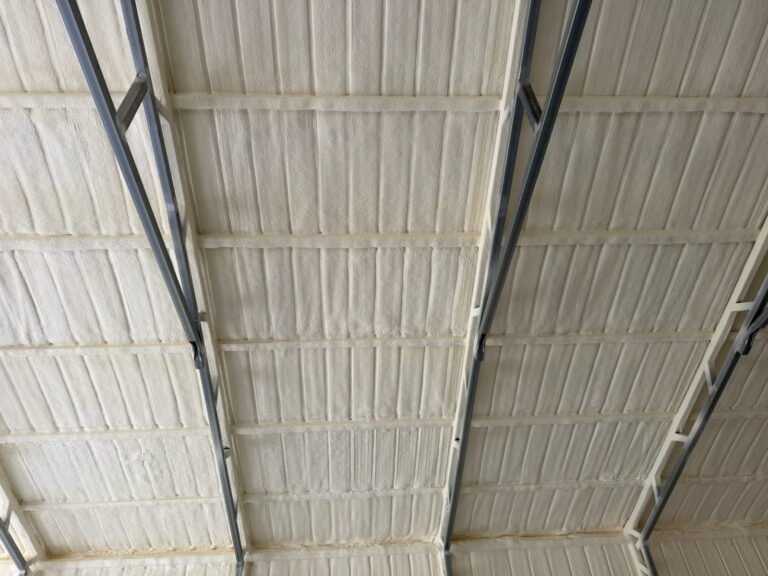
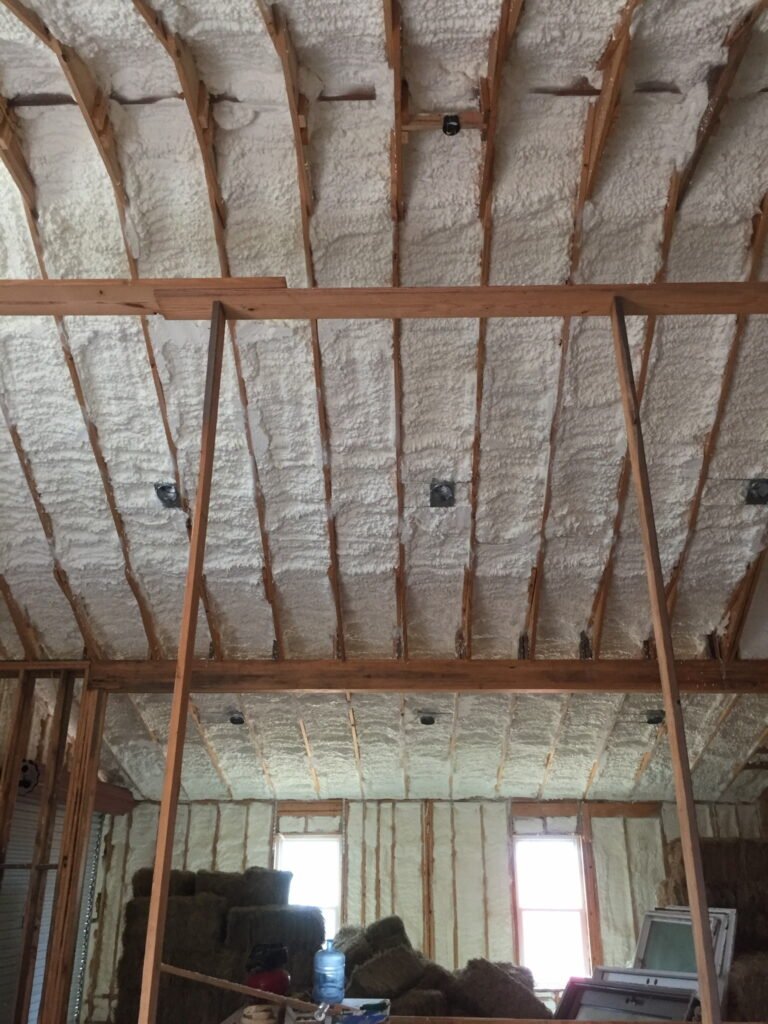
If water appears on cool mornings, across the roof rather than in spots, and does not correlate with rain, you have condensation. That is an insulation problem and no amount of roofing work will fix it. We have seen buildings re roofed twice for a condensation issue that closed cell foam on the underside of the panel would have solved. See closed cell spray foam.
Getting this diagnosis right is the single most valuable thing an inspection does, and it costs you nothing.
When we will tell you not to do it
Neither of these systems is a way to avoid dealing with a roof that is finished.
- Saturated insulation under the membrane. If the existing roof has taken on significant water, it has to come off. Sealing wet material under a new system traps it permanently.
- Structural deck problems. Rotted or failing decking is a structural repair, not a coating job.
- Severe corrosion. Metal that has rusted through is replaced, not painted over.
- Too many existing layers. There are limits on how much roofing can be built up over a deck, and they are there for good reason.
If we find any of these we say so in the report. Selling a coating over a failed roof produces a call back within a year and a customer who is right to be angry.
Maintenance and lifespan
Both systems are maintainable rather than disposable, which is their main commercial advantage. The foam and the metal underneath are protected by the coating, and the coating is the only element that weathers. When it eventually thins, it is re coated. There is no tear off, no disposal, and no interruption to the building below.
Practical maintenance is straightforward: inspect annually and after severe weather, keep drains and gutters clear, look at any penetration added since the roof was done, and re coat on schedule rather than waiting for a leak. Roofs that are inspected get maintained cheaply. Roofs that are ignored get replaced.
What drives the price
- Roof area and access, including how equipment and material get up there
- Condition of the existing roof and how much preparation and repair is needed first
- Foam thickness on an SPF system, and whether slope has to be built
- Coating type and thickness, which drives the warranty available
- Penetration count. A roof covered in curbs, vents and equipment takes far longer to detail than an open one
- Whether any tear off is unavoidable
- Working hours, if the operation below cannot be disturbed
Restoration is generally a fraction of the cost of replacement, and it is treated differently for tax purposes in many cases as maintenance rather than capital improvement. That is worth raising with your accountant, because it can change the comparison meaningfully.
What a Houston roof is up against
Roofing products are tested to national standards. The Gulf Coast then applies a set of conditions that most of the country never sees, and it is worth understanding why roofs age faster here.
Ultraviolet exposure. Long, intense summers break down organic materials and chalk out unprotected surfaces. A roof here receives more UV energy over its life than the same roof in a northern state.
Thermal cycling. A dark roof surface can reach well over one hundred and fifty degrees in the afternoon and then drop sharply after a storm or overnight. Metal expands and contracts through every one of those cycles, and that constant movement is what backs fasteners out, opens laps and fatigues seams. It is mechanical wear driven by temperature, and reflectivity is the most direct way to reduce it.
Rainfall intensity. Houston does not get gentle rain. It gets volume in short bursts, which finds any detail that is marginal and overwhelms drainage that is even slightly undersized or partially blocked.
Wind and storm loading. Tropical systems test edge details, flashings and anything mechanically fastened. A bonded, monolithic surface has no lifting edge for wind to get under.
Humidity. High year round moisture keeps corrosion active on exposed metal and feeds condensation on any cold surface inside the building.
Taken together this is why roofs in this market often need attention earlier than their nominal service life suggests, and why reflectivity and seamlessness matter more here than the specification sheet implies.
Comparing restoration against replacement
When a commercial roof starts causing problems the instinct is to price a replacement. It is worth putting the two options side by side properly before deciding.
- Cost. Restoration is typically a fraction of replacement, because the existing roof stays and there is no tear off or disposal.
- Disruption. Replacement means an open building at some point in the process. Restoration keeps you watertight throughout and can be staged around your operation.
- Waste. A tear off sends a large volume of material to landfill. Restoration sends none.
- Accounting treatment. Restoration is frequently treated as maintenance rather than capital improvement. That can change the real cost comparison significantly, and it is worth a conversation with your accountant.
- Renewability. A restored roof is re coated at the end of the coating life rather than replaced again, so the decision compounds in your favour.
The honest caveat is that restoration only applies to a roof that is fundamentally sound. If the deck is failing, the insulation beneath is saturated, or the metal has corroded through, replacement is the correct answer and we will tell you so rather than sell you a coating that buys eighteen months.
Frequently asked questions
Can you coat over my existing roof without tearing it off?
In most cases yes, provided the existing roof is dry, sound and not built up beyond what the deck and code allow. If there is saturated insulation underneath, it has to come off first and we will tell you that after the survey.
How long does a coating last?
It depends on the product, the thickness applied and the exposure. The important point is that it is renewable: when it thins it is re coated rather than replaced, with no tear off.
Will a coating add insulation value?
Very little. A coating reflects heat and protects the roof. If you need R value, that is an SPF system or insulation inside the envelope. Anyone selling a coating as insulation is overstating it.
My roof drips but only in the mornings. Is that a leak?
Almost certainly condensation rather than a leak, especially if it happens across the roof and not during rain. That is solved with insulation on the underside of the panel, not with roofing work.
Can you fix ponding water?
Often yes. Foam can be built up in thickness to create fall toward the drains, which is one of the genuine advantages of a sprayed system over sheet materials.
Do we have to close the building during the work?
No. The work happens on the roof and is staged by area. We agree hours and sequencing with you in advance, and out of hours working is available where the operation requires it.
Is it suitable for residential roofs?
These systems are designed for flat and low slope roofs, which are overwhelmingly commercial. A pitched shingle roof on a house is a roofer job, and we will say so rather than take it.
What happens to my rooftop equipment?
Units, curbs and penetrations are worked around and detailed in. Anything that has to be lifted or temporarily disconnected is identified in the survey and coordinated so it is not a surprise on the day.
Book a roof survey
We will walk the roof, tell you honestly whether you are looking at a leak or a condensation problem, and price the work that actually solves it. Call (713) 281-9585 or request a free estimate.