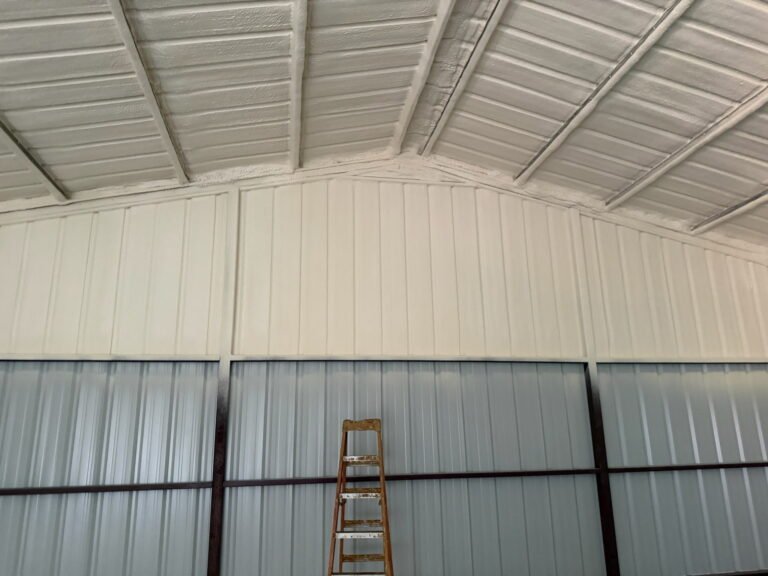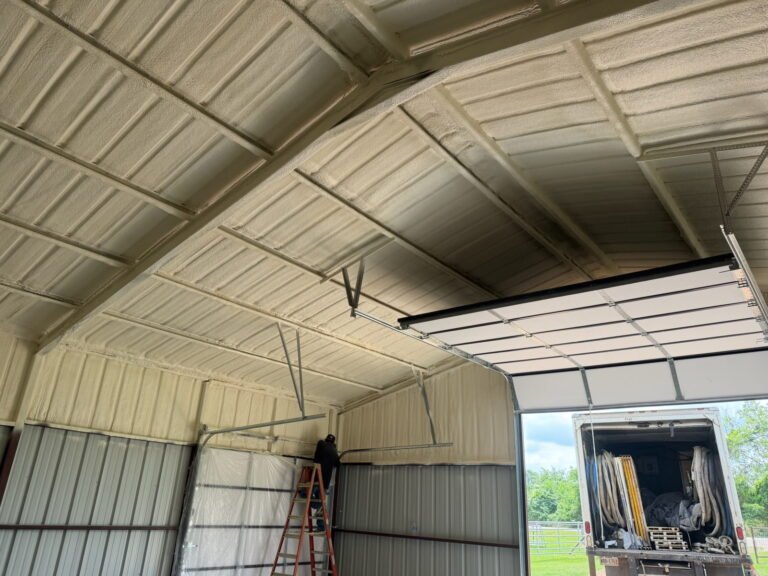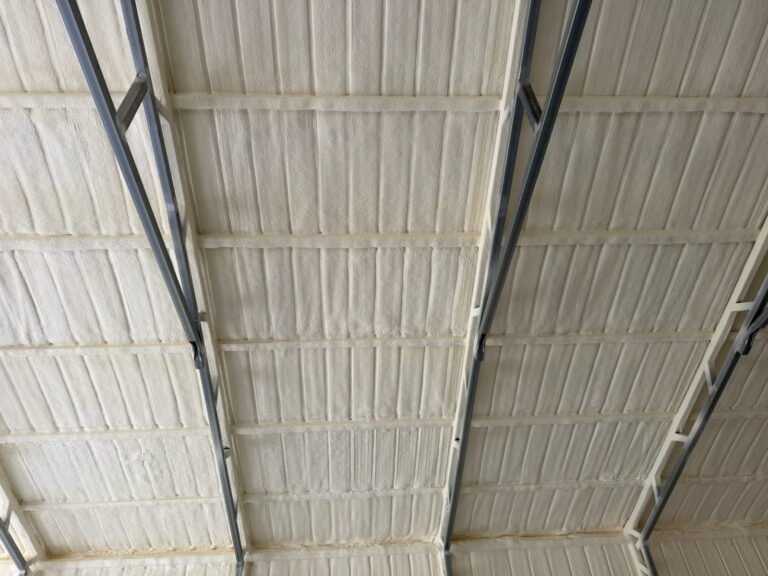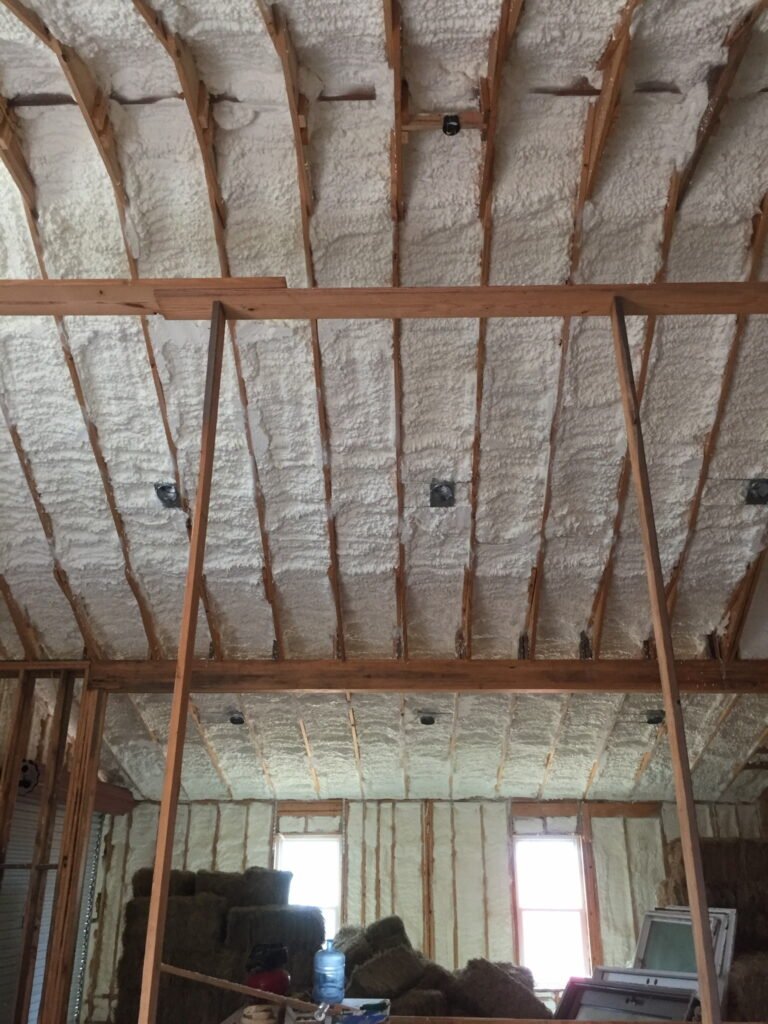
Walls are where most Houston homes quietly lose the argument with the weather. The attic gets all the attention because the temperatures up there are dramatic, but the wall assembly is the surface with the largest area, the most penetrations, and the least likely to have been insulated properly in the first place. This page covers what goes wrong in a wall, what we install in new construction, how we retrofit walls that are already closed up, and what results you should reasonably expect.
Why wall insulation underperforms
Nearly every wall in this city was insulated with fibreglass batt, and the published R value of a batt is measured in a laboratory under conditions that do not exist on a job site. The rating assumes a batt that exactly fills its cavity, touches every surface, is not compressed anywhere, and has no gaps at the edges.
What actually goes into a wall is cut around outlet boxes, split to pass wiring, stuffed behind plumbing, compressed at the plates, and left short at the corners and at every non standard bay. Each of those compromises is a small hole in the thermal envelope, and a wall has hundreds of them. A batt compressed to two thirds of its intended thickness does not deliver two thirds of its R value, it delivers considerably less, because the loft is the insulation.
Then there is the part the R value never described at all. Air moves through a batt with almost no resistance. Fibreglass is a filter, not a barrier. In a climate where hot, humid outdoor air is being pushed against your walls for eight months a year, that air movement is carrying heat and moisture straight past your insulation and into the house.
What spray foam changes
Foam is applied as a liquid and expands into whatever shape the cavity actually is. There is no cutting, no fitting, no compressing, and no installer judgement about how tightly to pack it around an obstruction. It flows around the wiring, seals to the box, fills the odd sixteen inch bay and the awkward four inch one identically, and bonds to the studs and sheathing as it cures.
That removes the installation variable, which is the single biggest reason wall insulation disappoints. It also means the wall is air sealed and insulated in one operation rather than two, and the air sealing is not dependent on someone remembering to caulk the top plate.
Which foam belongs in a wall
In Houston we generally specify closed cell on exterior walls. Two reasons. First, wall cavities are shallow and fixed, so R per inch matters more than anywhere else in the building, and closed cell delivers roughly R-6.5 per inch against about R-3.7 for open cell. Second, at around two inches closed cell also acts as a vapour retarder, which is exactly what you want facing months of high dew point air.
Open cell is the right product for interior partition walls, where the job is sound rather than climate, and where the extra depth needed is available and costs nothing.
New construction and gut remodels
This is the straightforward case. We spray after rough in is complete and inspected, before drywall goes up.
- Walk the shell. We confirm rough in is signed off, check for anything that should not be buried, and note where the assembly changes.
- Mask and protect. Windows, sills, finished surfaces, electrical panels and anything else that must stay clean.
- Spray in controlled lifts. Closed cell goes on at no more than about two inches per pass, letting each lift cure before the next. Thicker passes trap heat in the curing foam and can scorch the core.
- Trim flush. Anything proud of the studs is shaved back so the drywall crew is not fighting our work.
- Clean and walk it. Trimmings bagged and removed, depth and coverage confirmed with you or the builder.
Because this is the moment the wall is open, it is also the cheapest moment it will ever be to do this properly. Retrofitting the same wall later costs more and delivers slightly less.
Existing walls
Most of our residential work is on houses that are already finished. There are three routes, and which one applies depends on what is happening in the building.
Injection foam
We drill a small access hole into each stud bay, inject foam to fill the cavity, then plug and patch the holes ready for touch up paint. From the outside the drilling can be done through the siding and made good. This is the least disruptive option and the only realistic one when you are not otherwise opening the walls.
Full cavity fill during a remodel
If the drywall is already coming off for a kitchen, a bathroom or a whole room renovation, that is the moment to spray properly. You get the same result as new construction for the cost of the foam, because the access is already paid for by the other trade.
Rim and band joist sealing
The rim joist is the band of framing where the floor system sits on the foundation. In most older Houston homes it is either bare or has a scrap of batt pushed into it. It is one of the largest single air leaks in the entire building and it is accessible without opening a single wall. A few inches of closed cell here is a small, cheap job with a disproportionate effect on comfort, and we will often recommend it before a full wall retrofit.
Interior walls and sound
Insulating an interior partition does nothing for your energy bill and a great deal for how the house feels to live in. Open cell foam absorbs airborne sound rather than reflecting it, which is why it outperforms both batt and closed cell for this purpose.
The walls worth doing are usually obvious once you think about them: bedrooms that back onto living space, any wall shared with a bathroom, home offices, media rooms, and the wall between a garage and the house. It is one of the cheapest quality of life upgrades available while a wall is open.
One honest limitation: foam absorbs airborne sound, meaning voices and television. It does not stop impact sound such as footsteps overhead, because that travels through the structure rather than the air. Anyone who tells you insulation will fix footsteps is overselling.
What changes after the work
- Room to room temperatures even out. The rooms on the sunny side stop being the rooms nobody sits in during the afternoon.
- Less humidity pushed in. Sealing the wall reduces the volume of wet outside air arriving in the house, which takes load off the air conditioner and helps it dehumidify properly.
- Less dust and pollen. Air that was arriving through the envelope was arriving unfiltered.
- Quieter. A sealed wall is a better acoustic barrier than a leaky one, even when sound was not the goal.
- Shorter cooling cycles. The system stops fighting a continuous inward flow of heat and moisture.
Walls work best as part of a whole envelope. If the attic is still unsealed, the wall work will help but it will not transform the house. See attic insulation for the other half of the job, and we will tell you honestly which one to do first if the budget only stretches to one.
Code, safety and covering
The crew sprays in supplied air respirators and full protective gear, and the building stays clear during application and for the re entry window, which we give you in writing before we start. Once cured the foam is inert.
Building code requires spray foam in occupied space to be separated from the interior by a thermal barrier, most commonly half inch drywall. In new construction that is happening anyway. On a retrofit where foam would be left exposed, for example in an unfinished garage or utility space, an approved covering has to be part of the scope. We identify which requirement applies and price it, rather than leaving you with a problem at inspection.
What drives the price
We do not publish a per square foot figure, because any number quoted before seeing the building is a guess. What actually moves it:
- Installed depth, since foam is sold by the board foot
- Open shell or finished house, which is the single largest factor on a retrofit
- Masking, because an occupied home needs far more protection than a bare frame
- Wall complexity, meaning penetrations, odd framing, blocking and obstructions
- Patching and making good on injection work
- Removal, if existing material has to come out first. See insulation removal.
Where the budget is tight, fibreglass installed carefully in an already air sealed wall is a legitimate answer and we will say so.
How wall assemblies fail in a hot humid climate
Most of the insulation advice online was written for cold climates, and applying it here causes real damage. In a heating climate the vapour drive runs outward, so you place the vapour retarder on the warm interior side. Houston runs the opposite way for most of the year: hot, saturated outdoor air is pushing inward toward a cooled interior, and the cold surface it wants to condense on is inside the wall.
Put an interior vapour barrier in a Houston wall and you have built a trap. Moisture arrives from outside, reaches the barrier, cannot get past it, and sits against the framing. That is how sheathing rots in a house that has never had a leak.
Closed cell foam sidesteps the problem because it stops the air movement that carries the moisture in the first place. Vapour cannot condense inside an assembly it cannot enter. This is why we specify it on exterior walls here rather than simply reaching for the highest R value on the shelf.
What we look for before quoting a wall
The inspection is not a formality. On wall work specifically we are checking:
- Actual cavity depth. Two by four and two by six walls give very different options, and older homes are not always what the plans say.
- Existing moisture staining on the sheathing or framing, which points to a cladding or flashing problem that has to be fixed before anything is sealed inside.
- Wiring age and type. Anything that should not be buried gets flagged to your electrician first.
- Cladding type, which decides whether injection can be done from outside and how it will be made good.
- Where the wall meets other assemblies, at the rim joist, the top plate and around windows, because those junctions leak more than the field of the wall does.
- Whether the attic is already sealed, since that changes which job we recommend you spend on first.
If we find something that makes wall insulation the wrong next purchase, we say so in the proposal. We would rather do the right job later than the wrong job now.
Frequently asked questions
Can you insulate my walls without removing the drywall?
Yes. Injection foam goes in through small access holes that are then plugged and patched ready for touch up paint. Drilling can often be done from outside through the siding instead, depending on the cladding.
Do you have to remove the old batt insulation first?
For a full spray, yes, the cavity has to be clear and the substrate clean and dry. Injection foam can sometimes be used to fill around existing material, but the result is less predictable and we will tell you if it is not worth doing.
Will the drilling damage my walls?
The access holes are small, plugged and patched as part of the work. You will need to touch up paint over the patches. On exterior drilling through siding, the cladding is refitted and made good.
Is closed cell or open cell better for exterior walls?
Closed cell, in this climate. It gives more R value in a shallow cavity and acts as a vapour retarder against high dew point air. Open cell is the better choice for interior partitions where sound is the goal.
Will insulating my walls stop noise from the street?
It will reduce it, because sealing air paths cuts airborne sound. Windows are usually the weak point for street noise, so insulation helps but will not solve it on its own.
Should I do walls or the attic first?
In almost every Houston home, the attic. That is where the ducts are and where the biggest temperature difference sits. Walls are the logical second phase, or the first phase if you are already opening them for a remodel.
How long does wall insulation take?
A new construction shell is usually one day. Injection retrofits depend on the number of bays and the amount of making good, and the schedule is stated in the written proposal.
Can foam cause problems with my wiring or plumbing?
No, foam is sprayed around existing services and cured foam is inert. What matters is that anything needing future access, or anything generating heat that is not rated to be buried, is identified before we spray. That is part of the inspection.
Get your walls priced
We inspect before we quote, every time, and the price comes in writing with the foam type, the depth and the areas spelled out. Call (713) 281-9585 or request a free estimate.