In a Houston summer your attic is the single biggest thermal problem in the building. A conventional vented attic routinely reaches 130 to 150 degrees on an August afternoon, and almost every home in this city has its ductwork and air handler sitting directly in that heat. Insulating the attic properly is the highest leverage change most homeowners here can make.
Why Houston attics behave the way they do
The traditional model is a vented attic: soffit vents low, ridge or gable vents high, air moving through to carry heat and moisture away, and insulation on the attic floor separating that hot space from the house. It works reasonably well in a dry, temperate climate.
On the Gulf Coast it works against you in two ways. First, the air being pulled through those vents is not cool and dry, it is hot and saturated. Second, and more importantly, your ducts and equipment are in that space. A duct run losing conditioned air into a 140 degree attic, or gaining heat through thin duct insulation, is throwing away a large share of what you paid to cool.
Adding more blown insulation on top of the ceiling slows heat transfer. It does nothing about air moving through the ceiling plane, and nothing at all about the ducts.
Two ways to insulate a Houston attic
1. Foam at the roof deck, also called a conditioned attic
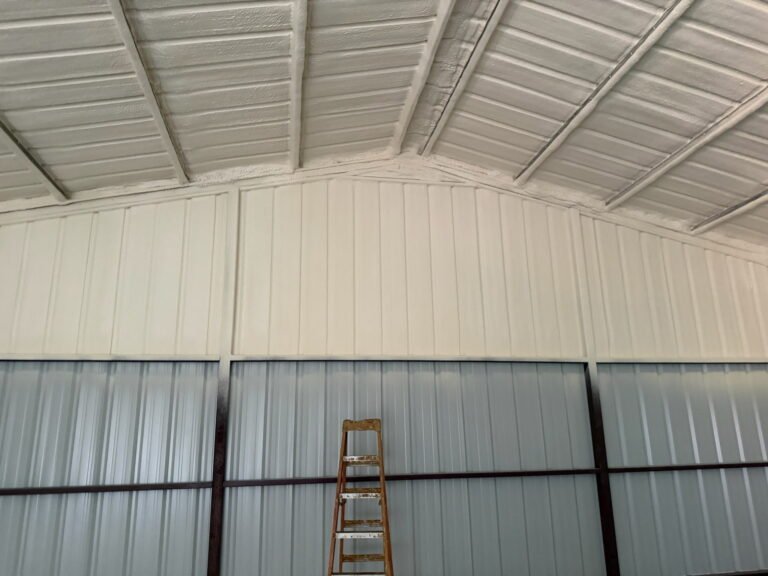
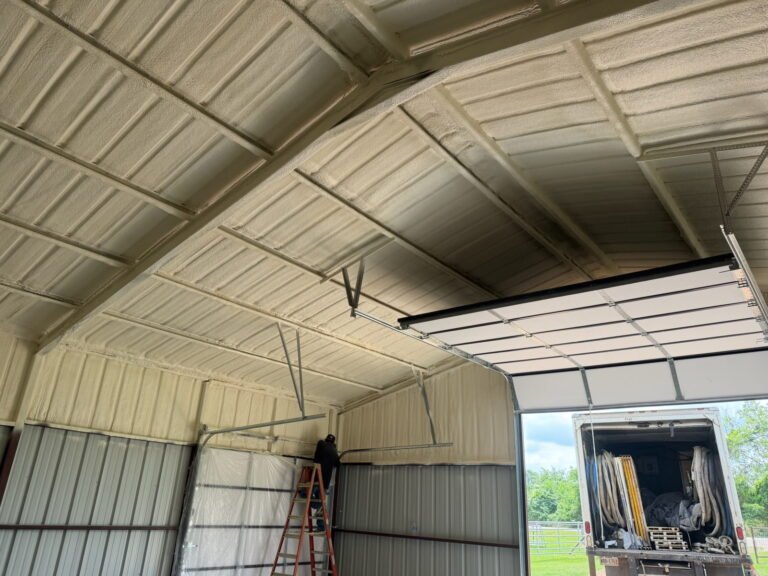
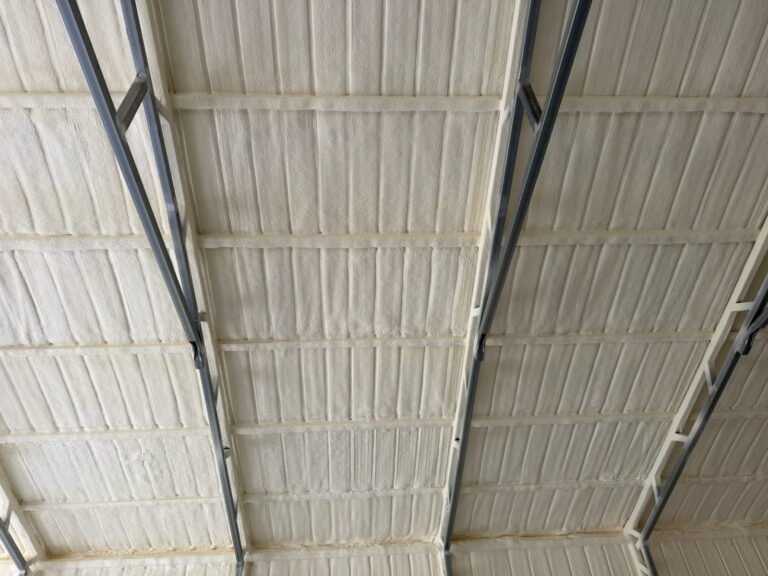
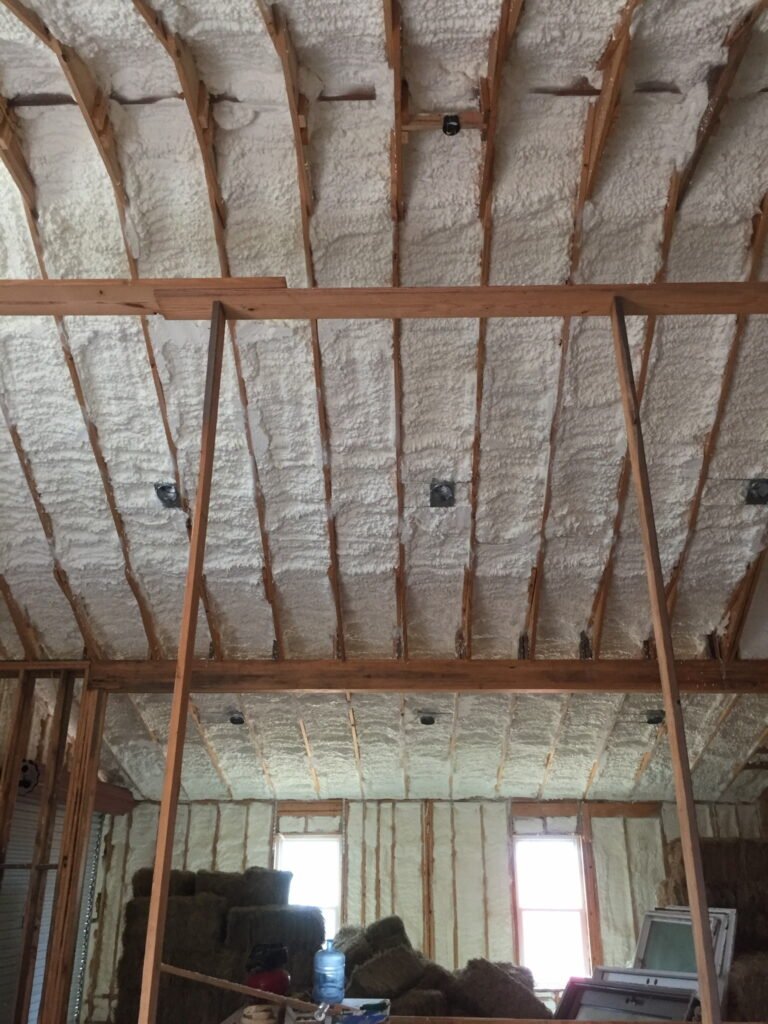
We spray the underside of the roof deck, seal the soffit and gable vents, and the attic becomes part of the conditioned envelope. The thermal boundary moves from the ceiling up to the roof.
- Ducts and air handler are now inside cooled space, so duct losses largely stop mattering
- Attic temperatures typically run within a handful of degrees of the house instead of fifty or more above it
- The attic becomes usable storage that will not destroy what you put in it
- Roof deck sealing also removes the wind driven rain and pest entry paths at the eaves
Most Houston roof decks get open cell foam, because rafter depth is available and the cost per square foot across a whole roof plane is far lower. Low slope assemblies and metal roofs usually call for closed cell instead.
2. Air sealing and insulating the attic floor
The attic stays vented. We air seal the ceiling plane first, every top plate, wire penetration, plumbing stack, bath fan and recessed light, then insulate over it.
- Lower cost than a full deck spray
- The right call when the ducts already run in conditioned space
- Keeps the existing venting strategy, which can simplify things on some roof types
The air sealing is the part that gets skipped by cheap operators, and it is the part that does most of the work. Insulation laid over an unsealed ceiling is a filter, not a barrier.
Which one is right for your house?
It comes down to where your ducts are, what your roof assembly looks like, whether you want the attic usable, and what the budget is. If the ductwork is in the attic, which it is in the large majority of Houston homes, sealing the deck is almost always the stronger investment. If your system is in a closet or a conditioned space and the ceiling plane is intact, the floor approach can deliver most of the benefit for less money.
We do not decide this from the driveway. We go into the attic, look at the duct layout, check the decking and the framing, and tell you which one your house actually needs.
What has to happen before we spray
- Remove what is failing. Compacted, wet, rodent damaged or contaminated material comes out first. Foam bonds to a clean dry surface or it does not bond properly at all. See insulation removal.
- Check the roof. Foam should never go over decking that is actively leaking or already water damaged. If we find a problem we tell you before we spray, not after.
- Deal with the electrics. Old knob and tube, unrated recessed cans and anything generating heat needs addressing before it is buried.
- Confirm ventilation strategy. If we are sealing the vents, that decision has to be deliberate and complete. Half sealing an attic is worse than leaving it alone.
- Protect the house. Access route covered, the work area contained, and a clear plan for how material and waste leave the building.
Code and safety
Spray foam in an attic must be covered by an approved ignition barrier, or by a thermal barrier such as half inch drywall where the space is occupied or used as living area. We tell you which requirement applies to your project and include it in the price. The crew sprays in supplied air respirators and full protective gear, the house stays clear during application, and we give you the re entry time in writing before we start.
Signs your attic insulation needs attention
- Upstairs rooms that never match the thermostat no matter how long the system runs
- An air conditioner that runs almost continuously through July and August
- Visible daylight, gaps or bare joists when you look across the attic floor
- Insulation that is grey, matted, uneven or noticeably thinner than it once was
- Droppings, nesting material or a smell when you open the hatch
- Dust and pollen that seem to arrive from nowhere
- Ice free but sweating ducts, or condensation stains on the ceiling below
What a conditioned attic changes day to day
The measurable effects are the ones people expect: shorter cooling cycles, more even temperatures upstairs, less strain on equipment. The ones that surprise homeowners are the smaller day to day changes.
Rooms directly under the roof stop being the rooms nobody wants to use in the afternoon. The temperature difference between the first and second floor closes up, because the second floor is no longer sitting under a heat source. Dust drops noticeably, since the attic is no longer pulling unfiltered outside air through every gap in the ceiling plane and pushing it into the house. Systems run quieter simply because they are running less.
There is also the equipment itself. An air conditioner that spends the summer cycling against a 140 degree attic is working at the edge of its capacity, and equipment that works at the edge of its capacity does not last as long as equipment that does not. Taking that load off is a maintenance decision as much as a comfort one.
Attic insulation and your ductwork
This is the part most quotes ignore, and it is usually where the money is going.
Flexible duct in a Houston attic is typically wrapped to a modest R value and run through a space that is fifty to seventy degrees hotter than the air inside the duct. Every foot of that run is losing capacity. Worse, most residential duct systems leak at the connections, which means a share of the air you paid to cool is being delivered into the attic instead of into your rooms, while an equal volume of hot attic air gets pulled into the return side to replace it.
You can chase that with duct sealing and heavier duct insulation, and it helps. Or you can move the boundary so the ducts are no longer in a hostile environment at all. That is what spraying the roof deck does, and it is why the conditioned attic approach so often outperforms simply piling more insulation onto the attic floor, even though the second option looks cheaper on the quote.
If your system is due for replacement anyway, this is the moment to have the conversation, because a properly sealed envelope may allow your HVAC contractor to size the new equipment down.
What we find in Houston attics
After enough inspections the same problems come up repeatedly. Whether or not you hire us, these are worth checking:
- Bath fans venting into the attic instead of through the roof. Every shower is pumping moist air into the space above your ceiling.
- Insulation pushed aside along service paths, leaving bare ceiling in exactly the areas people walk.
- Open chases around plumbing stacks and flues that run straight from the attic down into the wall cavities.
- Recessed lights that are not rated for insulation contact, buried anyway.
- Attic hatches with no insulation and no weatherstrip, which is a hole in the ceiling by any other name.
- Disconnected duct runs blowing conditioned air into the attic, sometimes for years.
- Storage decking laid over compressed insulation, which cancels most of its value.
We photograph what we find and include it with the proposal, so you can see the reasoning rather than take our word for it.
Attic insulation and Houston humidity
Heat is the obvious problem. Moisture is the one that quietly costs people money, and in this climate the two arrive together.
Warm air holds far more water vapour than cool air. When that air finds a cooler surface it gives the water up, and it gives it up on whatever it touches first. In a Houston attic the cool surfaces are the supply ducts and, if the ceiling is leaking conditioned air upward, patches of the ceiling plane itself. That is why sweating ducts and unexplained ceiling stains are so common here, and why they are almost always an air movement problem rather than a plumbing one.
A conditioned attic removes the temperature difference that drives condensation in the first place. There is no longer a hot humid reservoir sitting against cold ductwork, because the attic air is close to house conditions. That is a durability benefit as much as a comfort one: sustained condensation in an attic corrodes fasteners, stains and softens decking, and eventually feeds mould on the framing.
If we find existing moisture damage during the inspection, we say so before quoting the insulation, because insulating over an active moisture problem hides it rather than solving it.
Timing the work
There is no wrong season for attic work, but there are easier ones. Spring and autumn are the most comfortable for the crew and give you a finished envelope before the demand season arrives. Booking attic work in late spring means you feel the difference through the summer rather than after it.
Two things genuinely should be sequenced ahead of insulation. If the roof is near the end of its life, replace it first, because spraying the underside of a deck that is about to be torn off is money spent twice. And if the HVAC system is due for replacement, talk to us and your HVAC contractor together, since a sealed envelope can change the equipment sizing calculation.
Frequently asked questions
Is it safe to seal off my attic vents?
Yes, when it is done deliberately and completely as part of a conditioned attic design. The attic stops being an outdoor space and becomes an indoor one. What is not safe is sealing some vents and leaving others, which sets up air movement through the assembly with nowhere controlled to go.
Will I still be able to use my attic for storage?
Yes, and it becomes far better storage. A conditioned attic sits close to house temperature instead of well over a hundred degrees, so what you put up there is not slowly being cooked.
Do I have to remove the old insulation first?
Not always. If we are spraying the roof deck and the existing floor insulation is clean and dry, it can sometimes stay. If it is contaminated, wet or in the way of the work, it comes out. We tell you which after inspecting, not before.
How much will this reduce my electric bill?
We will not quote a percentage. It depends on your equipment, your duct condition, your windows and how you run the house. What is reliable is that in Houston the attic and the ducts are where most of the summer load comes from, so this is the highest leverage place to spend.
How long does an attic job take?
Most homes are one day on site for the spray. Add a day if there is significant removal first. Larger or more complex roofs can run longer and the schedule is in the written proposal.
Can you insulate around my ductwork?
With a conditioned attic the ducts no longer need to be worked around, because the whole space becomes conditioned. That is a large part of why the approach works so well here.
What if my roof is near the end of its life?
Replace the roof first. Spraying the underside of a deck that is about to be torn off is money spent twice, and we will tell you so rather than take the job.
Is foam or blown in fibreglass better for an attic?
Foam at the deck solves the duct problem, which blown fibreglass on the floor cannot. If the ducts are not in the attic, well installed blown fibreglass over a properly air sealed ceiling is a perfectly respectable and cheaper answer.
Book an attic inspection
We will go up, look at what is actually there, and give you a written price for the approach your house needs. Call (713) 281-9585 or request a free estimate.